
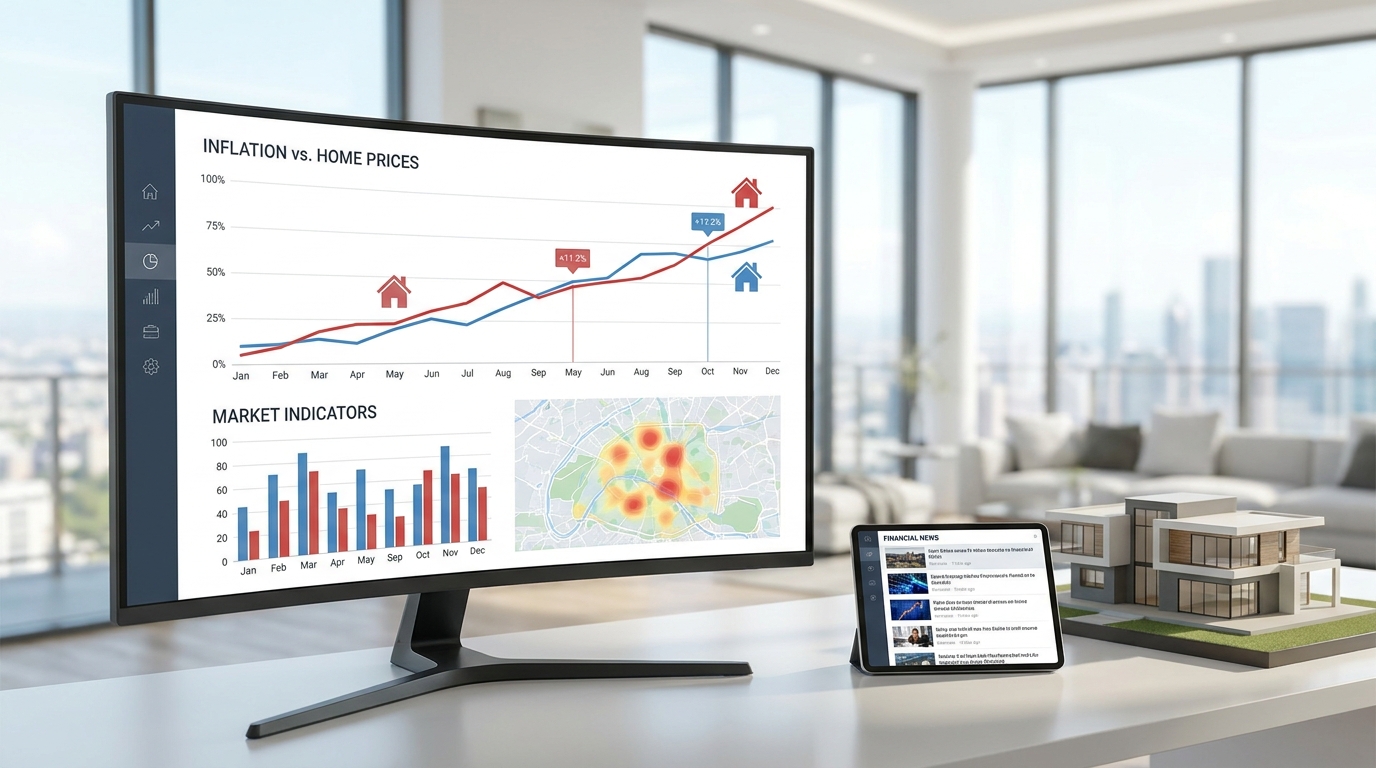
Inflation doesn’t just make groceries and gas more expensive—it can reshape the housing market in ways that directly impact what you pay (or earn) on a home. Sometimes inflation coincides with surging home prices; other times it cools demand so fast that prices flatten or fall. The key is understanding which channels inflation moves through—mortgage rates, incomes, construction costs, and buyer psychology—so you can make confident, data-driven decisions.
In this market-insights guide, you’ll learn exactly how inflation affects home prices, why the relationship isn’t always straightforward, and what practical steps you can take whether you’re buying or selling.
Inflation 101: Why it matters for housing
Inflation is the broad rise in prices across the economy over time. In housing, inflation matters because a home is both:
- A consumption good (you live in it), and
- A long-duration asset (its value reflects expectations about future costs, rents, and interest rates).
That dual nature creates a push-and-pull effect. Inflation can increase home values through higher replacement costs and rents, but it can also reduce affordability when borrowing costs rise. The net outcome depends on which force dominates in your local market at a given moment.
The 5 main ways inflation affects home prices
1) Mortgage rates: the fastest transmission mechanism
When inflation rises, central banks often respond by tightening monetary policy to slow demand. That typically pushes interest rates higher, including mortgage rates. Higher mortgage rates reduce purchasing power, which can put downward pressure on home prices.
Why this matters: Most buyers shop based on a monthly payment, not the sticker price. Even if the listing price doesn’t change, higher rates can make the same home significantly less affordable.
- Higher rates → lower affordability → fewer qualified buyers
- Lower demand → longer days on market → price cuts become more common
Practical takeaway: In inflationary periods, watch mortgage-rate trends as closely as local comps. Rates can change demand faster than any seasonal pattern.
2) Construction and replacement costs: a floor under prices
Inflation often raises the cost of building and renovating homes—materials, labor, permitting, and transportation can all climb. When replacement costs rise, existing homes become more valuable relative to what it would cost to build a similar home today.
This is one reason home prices can stay resilient even when affordability weakens: sellers know that rebuilding the same property is more expensive, and buyers still need housing.
- Higher building costs → fewer new builds penciling out
- Less new supply → tighter inventory → support for prices
Practical takeaway: If new construction slows in your area during high inflation, resale inventory may tighten later—supporting prices even as demand cools.
3) Wages and household income: inflation’s “second wave”
If wages rise alongside inflation, buyers may maintain (or even grow) their purchasing power—especially if inflation is moderate and mortgage rates don’t jump as quickly. But if wages lag, buyers effectively become poorer in real terms, which reduces demand for housing.
In other words: It’s not just inflation that matters—it’s inflation relative to income growth.
- Wages rise faster than prices → demand can stay stronger → prices may keep rising
- Prices rise faster than wages → affordability erodes → prices can flatten or fall
Practical takeaway: Track local job growth and wage trends (major employers, new developments, and migration patterns). Local income dynamics often explain why some markets rise while others stall.
4) Rents and investor demand: inflation can lift the “income value” of homes
Housing values are influenced by what buyers are willing to pay relative to the cost of renting. When inflation pushes rents higher, owning can look more attractive (even at higher prices), and investors may value homes based on rising rental income.
However, higher mortgage rates can reduce investor returns, especially for leveraged purchases. So inflation can increase rent-driven demand while rate hikes simultaneously reduce it.
- Rents up → owning looks better vs renting → upward pressure on prices
- Borrowing costs up → investment math weakens → downward pressure on prices
Practical takeaway: Compare local rent growth to mortgage payments for similar properties. If rent growth is outpacing ownership costs, price support may be stronger than headlines suggest.
5) “Inflation hedge” psychology and expectations
Homes are often viewed as a long-term hedge against inflation because the asset is tangible and replacement costs can rise over time. In some inflationary environments, this belief can boost demand—especially among buyers with substantial cash or equity.
But expectations can flip quickly. If buyers believe prices will fall due to higher rates or a weaker economy, they may delay purchases—reducing demand and pushing prices down in the short run.
Practical takeaway: Sentiment affects timing. If listings sit longer and price reductions increase, the market may be shifting from “inflation hedge” behavior to “wait-and-see.”
Why inflation doesn’t affect all markets the same way
Inflation is national (or global), but home prices are local. The same inflation shock can produce very different outcomes depending on:
- Supply constraints: Zoning, land availability, and new-build pipeline
- Local employment: Industry health, layoffs, and wage growth
- Migration: Inflows/outflows, remote work patterns, lifestyle moves
- Homeownership tenure: Markets with many long-term owners often have fewer forced sellers
- Financing structure: Areas with more cash buyers can be less rate-sensitive
Important nuance: Inflation can push prices up over the long term while still causing short-term slowdowns if rates rise quickly. It’s common to see nominal prices (sticker prices) hold steady while real prices (inflation-adjusted) fall.
What buyers should do during inflation (actionable checklist)
Inflation-heavy markets reward preparation. Use this checklist to stay ahead of both prices and payments.
1) Shop the payment, not just the price
Run scenarios at multiple rate levels. A “good deal” is only good if it fits your monthly budget with room for taxes, insurance, and maintenance.
- Stress-test your payment at today’s rate and a slightly higher one.
- Compare total monthly housing cost (PITI + HOA + utilities where relevant).
- Prioritize homes with value levers (layout, location, condition) rather than cosmetic perfection.
2) Use local data to find “rate-sensitive” opportunities
When rates rise quickly, some segments soften first—often entry-to-mid price bands dependent on financing. Look for:
- Rising days on market
- More frequent price reductions
- Listings relisted after failed contracts
3) Negotiate with facts, not fear
In inflationary periods, markets can change fast. Bring comps, recent price cuts, and seller concessions into your negotiation strategy. If the market is cooling, it may be possible to negotiate:
- Seller-paid closing costs
- Repair credits
- Price adjustments based on inspection findings
What sellers should do during inflation (pricing and strategy)
If inflation is elevated, your success depends on aligning price with today’s buyer affordability—not last season’s peak comps.
1) Price for the market buyers are in today
Even small rate moves can change what buyers qualify for. To price effectively:
- Anchor to the most recent comps (last 30–60 days), not outdated sales.
- Track active competition—your home is competing with current listings, not last year’s market.
- Watch pending sales (if available) to gauge real-time demand.
2) Make inflation-resilient improvements
When budgets tighten, buyers scrutinize condition and operating costs. Focus on improvements that reduce uncertainty and improve efficiency:
- Fix major deferred maintenance (roof issues, HVAC concerns, water intrusion).
- Boost energy efficiency (insulation, sealing, smart thermostats) where ROI is strong.
- Document upgrades with receipts and timelines to build buyer confidence.
3) Offer smart concessions instead of chasing the market down
If demand softens, strategic concessions can protect your net and keep momentum:
- Closing cost credits can expand your buyer pool.
- Repair credits help buyers manage inflation-driven renovation costs.
- Flexible closing timelines can attract buyers juggling rate locks and logistics.
Key indicators to watch: inflation-to-home-price dashboard
If you want to understand where home prices may head next, track a small set of indicators consistently:
- Mortgage rates: Changes often lead demand shifts by weeks.
- Inventory and months of supply: Rising supply can signal price pressure.
- Days on market and price reductions: Early signs of cooling (or heating).
- Rent trends: Supports valuation through the rent-vs-own equation.
- Local job and wage growth: Determines real buying power.
Tip: Look at both nominal and real changes. A 3% home-price increase during 4% inflation is actually a 1% decline in inflation-adjusted terms.
Conclusion: Inflation changes the rules—data keeps you in control
So, how does inflation affect home prices? Through multiple channels at once: it can raise replacement costs and rents (supporting prices) while also pushing mortgage rates higher (hurting affordability and demand). That’s why housing outcomes vary by city, neighborhood, and price tier—even in the same inflationary environment.
The advantage you have today is access to better tools and better data. With AIRE, you can analyze local comps, track market momentum, price strategically, and manage the transaction with AI-powered guidance—so you can buy or sell with clarity, not guesswork. Explore AIRE to see how AI can help you navigate inflation-driven market shifts and make your next move with confidence.