
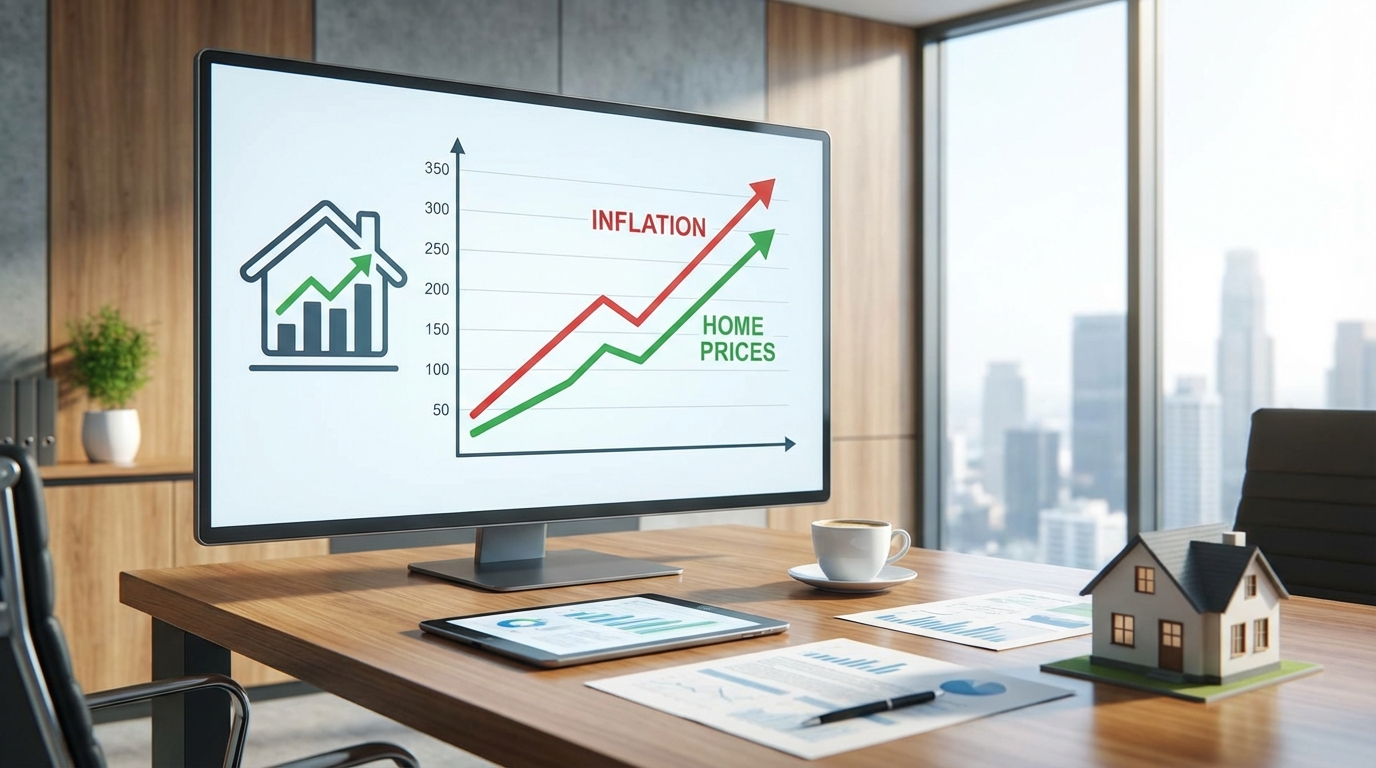
Inflation shows up everywhere—groceries, gas, insurance—and then it quietly makes its way into the housing market. If you’re wondering how inflation affects home prices, the answer is: it depends on what inflation is doing to interest rates, wages, building costs, and buyer demand at the same time. Those forces can push prices up, cool them down, or create a confusing mix where prices hold steady but affordability drops.
This guide breaks down the key mechanisms so you can make smarter decisions whether you’re buying, selling, or simply tracking the market.
Inflation 101: Why it matters for housing
Inflation is the general rise in prices across the economy over time. When inflation is high, each dollar buys less. Housing is deeply tied to inflation because homes are both:
- A consumption good (you live in it), and
- An asset (it can store value and appreciate).
In theory, “real assets” like housing can act as a partial inflation hedge. But in practice, housing prices are heavily influenced by financing conditions—especially mortgage rates. That’s why inflation’s impact on home prices often runs through the bond market and central bank policy.
The two big channels: costs and financing
- Cost channel: Inflation increases the cost to build and maintain homes (materials, labor, permits, insurance), which can put upward pressure on prices.
- Financing channel: Inflation often leads to higher interest rates, raising monthly payments and reducing how much buyers can afford—pressuring prices downward or slowing growth.
Understanding which channel is dominating in your local market is the key to predicting what comes next.
How inflation affects home prices through mortgage rates
Mortgage rates tend to rise when inflation is elevated because lenders demand higher returns to offset inflation’s erosion of purchasing power. Central banks may also raise policy rates to slow the economy and bring inflation down. Even if home prices don’t immediately fall, higher rates can sharply reduce affordability.
Affordability math: why rates can matter more than price
Home prices are only half the story—your monthly payment is often the constraint. When rates rise, the same home price can become unaffordable for many buyers. That typically leads to:
- Lower demand (fewer qualified buyers),
- Longer days on market,
- More negotiation (credits, repairs, price reductions), and
- Price growth slowing (or declining in some areas).
Rate shocks can freeze the market
A rapid rise in mortgage rates can create a “freeze” effect: buyers pull back due to payment shock, while existing homeowners hesitate to sell because they don’t want to give up their low locked-in rate. This can reduce inventory, which may keep prices from falling as much as demand alone would suggest.
What this means: inflation-driven rate increases can produce a market where transactions drop first, and price changes lag behind.
How inflation affects home prices through construction and replacement costs
Inflation raises the cost to build new homes—lumber, concrete, skilled labor, fuel for transportation, and even financing for builders. When the replacement cost of a home goes up, it can support higher prices for existing homes because buyers compare resale homes to new construction options.
New construction constraints can lift resale prices
If inflation pushes construction costs up while supply remains limited, builders may:
- Build fewer homes, or
- Build only higher-end homes to maintain margins.
That can reduce entry-level supply and keep pressure on prices—especially in markets with strong population growth or limited land.
Don’t forget operating costs
Inflation also affects the ongoing cost of owning a home, including:
- Home insurance premiums
- Property taxes (often tied to assessed values and municipal budgets)
- Maintenance and repairs (labor and parts)
- Utilities
Higher ownership costs can reduce what buyers are willing (or able) to pay, particularly in markets where insurance has risen quickly.
Inflation, wages, and buyer demand: the tug-of-war
Whether home prices rise or fall during inflation often depends on what happens to real incomes (income adjusted for inflation). If wages rise at or above inflation, many households can keep up. If wages lag, affordability worsens even if nominal home prices don’t move much.
When inflation can push prices up
Home prices may rise during inflation when:
- Wage growth is strong and supports demand
- Inventory is tight (few homes for sale)
- Households shift savings into real assets
- Rent inflation is high, making ownership comparatively attractive (even with higher rates)
When inflation can cool prices
Home prices may soften when:
- Mortgage rates rise faster than incomes
- Consumer confidence falls and buyers delay big purchases
- Unemployment increases after aggressive rate hikes
- Investors pull back due to higher borrowing costs and tighter cash flow
Inflation and local markets: why your ZIP code matters
National inflation is one thing; local housing dynamics are another. Inflation interacts with supply and demand differently depending on your city, neighborhood, and price tier.
Key local factors that change the outcome
- Housing supply: Markets with strict zoning or limited buildable land can stay expensive even in high-rate environments.
- Job mix: Areas with higher-income industries may see more resilient demand during inflation.
- Migration trends: Inflows of residents can offset affordability headwinds.
- Insurance and climate risk: Rising premiums can directly reduce buyer budgets in certain regions.
Actionable takeaway: Track inflation, but make decisions using local data: recent comparable sales, inventory levels, price reductions, and days on market in your target area.
Practical tips: what to do if you’re buying in an inflationary market
Inflation can make buyers feel like they’re racing against time. Instead of guessing, focus on controllable levers: payment structure, risk management, and negotiation.
5 buyer moves to consider
- Shop the payment, not just the price. Compare scenarios across different down payments, loan types, and rate options to find a sustainable monthly number.
- Use data to target motivated sellers. Look for listings with longer days on market, multiple price cuts, or stale photos—these often signal negotiation room.
- Ask for concessions strategically. In slower markets, seller credits (for closing costs or temporary rate buydowns where available) can improve affordability without requiring a big price drop.
- Stress-test your budget for inflation. Model higher insurance, taxes, and maintenance. If the home only works in a perfect-case scenario, it’s too tight.
- Keep optionality. Choose terms that protect you (inspection, appraisal strategy, financing timelines) so you can pivot if conditions change quickly.
Practical tips: what to do if you’re selling when inflation is high
When inflation pushes rates up, buyers become more payment-sensitive and less forgiving of overpriced homes. The winning strategy is to reduce uncertainty and make the numbers work.
5 seller moves to consider
- Price to the market you’re in, not the market you remember. Use recent closed comps and active competition—especially homes that actually received offers.
- Lead with transparency. Provide clear disclosures, a clean inspection posture, and documentation for upgrades. Inflation makes buyers cautious; clarity reduces friction.
- Optimize for appraisals. Higher rates can mean fewer bidding wars, which can tighten appraisal gaps. A pricing strategy aligned with comps lowers fall-through risk.
- Consider buyer incentives. In some conditions, targeted concessions can be more effective than repeated price cuts.
- Upgrade what impacts financing and insurance. Roof age, HVAC condition, and electrical issues can affect insurability and lender requirements—fixing these can expand your buyer pool.
Common misconceptions about inflation and home prices
“Inflation always makes home prices go up.”
Not always. Inflation often brings higher mortgage rates, which can reduce demand and slow or reverse price growth. Outcomes vary by location and timing.
“If rates drop, prices will automatically spike.”
Lower rates can increase affordability and demand, but price behavior still depends on inventory, employment, and consumer confidence. Rates are powerful—not omnipotent.
“You should wait until inflation is gone.”
Inflation is cyclical and unpredictable. A better approach is to decide based on your timeline, budget resilience, and local market conditions—not a perfect macro signal.
Conclusion: turn inflation uncertainty into a smarter plan
So, how does inflation affect home prices? It works through multiple pathways at once—especially mortgage rates, construction costs, and real household income. In some markets, inflation supports prices by raising replacement costs and keeping supply tight. In others, the rate-driven affordability squeeze cools demand and shifts power toward buyers.
The advantage today is that you don’t have to rely on guesswork. With AIRE, you can use AI-driven insights to analyze local comps, track pricing trends, estimate net proceeds, model affordability scenarios, and manage the transaction steps confidently—so you buy or sell on your terms, even in an inflation-shaped market.
Ready to make your next move with clarity? Explore AIRE to get data-backed guidance, smarter pricing, and step-by-step tools to navigate your real estate transaction independently.