
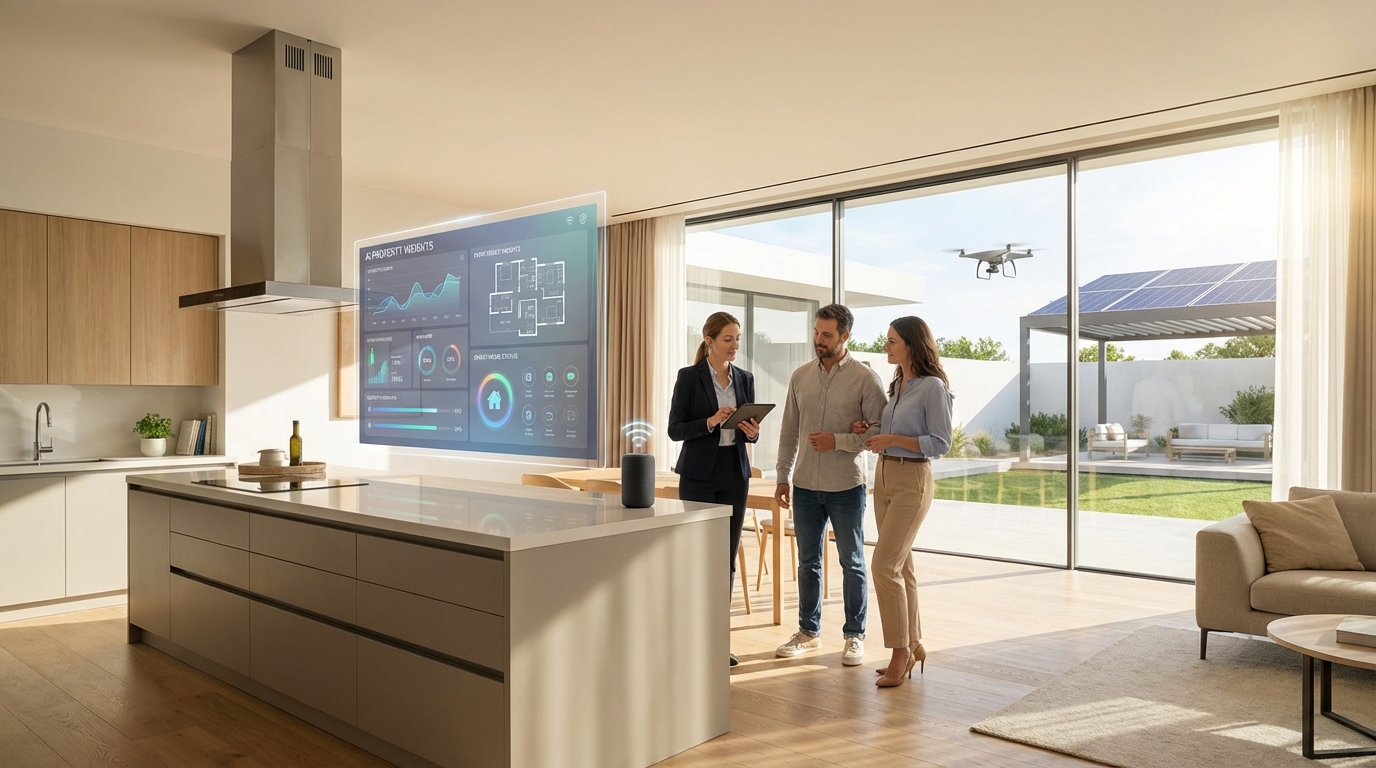
An open house isn’t just a few hours with the lights on—it’s a high-impact marketing event. When done right, it creates urgency, captures motivated buyer interest, and gives you the data you need to price, position, and negotiate with confidence. When done poorly, it becomes a low-value “looky-loo” parade that drains your weekend and yields no offers.
This guide breaks down modern, data-driven open house strategies you can use to attract qualified buyers, improve the on-site experience, and convert interest into showings and offers—without relying on traditional agents. You’ll also see how AI can help you plan, personalize, and follow up faster so no lead slips through the cracks.
1) Pre-Open House Strategies: Set Up Demand Before Anyone Walks In
The best open houses are won before the doors open. Your goal is to (1) maximize qualified traffic, (2) communicate clear value, and (3) remove friction for buyers who want to act quickly.
Price and positioning: make your listing “open-house-ready”
Even great staging can’t overcome mismatched expectations. Start with a quick reality check:
- Pricing: Use recent comparable sales and active competition to ensure your price aligns with what buyers are seeing online.
- Listing clarity: Confirm square footage, upgrades, year built, utilities, HOA details (if any), and disclosure notes are clean and consistent.
- Offer-friendly terms: If you can be flexible on closing date, repairs, or possession, say so—buyers respond to certainty.
Actionable tip: Add one sentence in your listing and open house promo that answers, “Why this home?” For example: “Renovated kitchen + new roof + walkable neighborhood = turnkey value.”
Market like an event, not an appointment
Strong open house strategies borrow from event marketing: give people a reason to attend now, and make it easy to share.
- Choose the right time window: A 2–3 hour window typically works best. Avoid starting too early; late morning to mid-afternoon often captures peak weekend traffic.
- Create a clear “why attend” hook: Examples: “First public showing,” “New price,” “Move-in ready,” “Seller offering credit,” or “Bonus room—must see in person.”
- Use multi-channel promotion: Post on neighborhood groups (where allowed), local community calendars, your own social channels, and property-focused platforms.
Actionable tip: Promote twice: once 3–5 days before, and again the morning of. The second reminder catches buyers who decide last-minute.
Use AI to build a smarter open house plan
AI helps you move from guesswork to a repeatable checklist. A modern approach includes:
- Audience targeting: Identify likely buyer personas (first-time buyer, move-up buyer, investor, downsizer) based on location, pricing, and features.
- Messaging variations: Generate multiple ad captions and headlines that emphasize different value drivers (schools, commute, upgrades, layout).
- Open house collateral: Draft a feature sheet, “top 10 upgrades” list, and a neighborhood highlights one-pager.
With AIRE, you can generate listing-ready copy, create clean buyer-facing summaries, and keep your transaction workflow organized—so your open house supports the bigger goal: a clean path to offer and close.
2) On-Site Open House Strategies: Create Flow, Confidence, and Conversion
Your open house experience should do three things in order: welcome, inform, and convert. That means guiding visitors, answering questions proactively, and capturing the right details for follow-up.
Stage for movement (not just photos)
A home can look great in photos but feel cramped or confusing in person. Optimize for traffic flow:
- Entry moment: The front door sets the tone. Make it bright, clean, and clutter-free.
- Clear pathways: Remove obstacles so multiple groups can circulate without bottlenecks.
- “Anchor” each room: One focal point (fresh linens, a simple table setting, a tidy desk) helps buyers imagine daily life.
- Small fixes that matter: Replace burnt bulbs, tighten loose handles, and eliminate odors—buyers interpret these as maintenance signals.
Actionable tip: Set interior doors fully open or fully closed (not halfway). It subconsciously reads as “well-maintained and intentional.”
Turn questions into confidence with “instant answers” materials
Most buyers ask the same questions. If your open house doesn’t answer them quickly, you lose momentum. Prepare a simple information station:
- Feature sheet: Beds/baths, square footage, renovations with dates, utility estimates (if available), and standout amenities.
- Neighborhood map: Transit, parks, restaurants, schools, and commute times.
- Disclosures and key docs: Provide clear instructions on how to request or view them digitally (QR code works well).
- Offer guidance: Share your preferred timeline and how buyers can submit.
Actionable tip: Add QR codes that link to (1) the full listing details, (2) a digital disclosure packet, and (3) a “book a private showing” form.
Lead capture that doesn’t feel awkward
Open houses are a prime opportunity to meet motivated buyers—but only if you capture contact info and intent. Make sign-in feel helpful rather than intrusive:
- Use a digital sign-in: A tablet or phone form is faster and more legible than paper.
- Explain the value: “Sign in to get the disclosures, renovation list, and any updates on offers.”
- Ask 2–3 qualifying questions: For example: “Are you already pre-approved?” “When are you hoping to move?” “Do you have a home to sell?”
- Tag visitors by intent: Hot (ready in 0–30 days), warm (30–90), long-term (90+), neighbor/curious.
Actionable tip: Offer a “digital open house packet” delivered by text or email. It increases sign-in completion and sets you up for fast follow-up.
Create urgency without pressure
Buyers can sense desperation, but they also respond to real demand signals. Try these ethical urgency builders:
- Share factual interest: “We’ve had X showings this week,” or “We’re scheduling private showings after today.”
- Set expectations: If you plan to review offers on a specific day, state it clearly.
- Highlight scarcity features: Large yard, extra parking, finished basement—anything that’s rare in your area/price point.
Actionable tip: Use a simple “next steps” sign near the exit: “Love the home? Scan to book a private showing or request disclosures.”
3) Post-Open House Strategies: Follow Up Like a Pro (While It’s Still Hot)
The biggest difference between average and high-performing open houses is what happens in the 24 hours after. Interest decays fast—your job is to respond while the home is still top-of-mind.
Use a 3-touch follow-up sequence
Here’s a simple, effective sequence you can run after every open house:
- Within 2 hours: Send the digital packet + ask one question. “Thanks for coming by—would you like disclosures or to schedule a private showing?”
- Next morning: Share one high-value detail (utility estimate, upgrade list, neighborhood note) and ask about timing/pre-approval.
- 48–72 hours: Offer a clear next step: showing slots, offer deadline (if applicable), or a quick call/text to answer questions.
Actionable tip: Keep messages short and specific. Buyers are comparing multiple homes—help them remember why yours wins.
Measure performance: track what your open house actually did
If you want repeatable results, treat each open house as a mini experiment. Track:
- Traffic: Total groups + peak hour counts.
- Quality: How many were pre-approved, actively shopping, or booking showings?
- Engagement: Which rooms/features got the most comments?
- Conversion: Sign-ins / visitors, private showings booked, offers initiated.
- Objections: Price, layout, smell, road noise, repairs—log them verbatim.
Actionable tip: If you hear the same objection 3+ times, address it immediately—update your listing copy, add a note at the info station, or adjust your pricing strategy.
Common open house mistakes (and how to fix them fast)
- Mistake: No clear sign-in system.
Fix: Add a QR-based sign-in + instant delivery of a digital packet. - Mistake: Too much small talk, not enough guidance.
Fix: Use a simple “tour path” and point visitors to key features. - Mistake: Poor parking or confusing entry.
Fix: Put clear directional signage and a parking note in your promo. - Mistake: Waiting days to follow up.
Fix: Automate a same-day message and a next-day check-in.
4) AI-Powered Open House Strategies: Make Every Step More Effective
AI doesn’t replace the human element of a home tour—it strengthens the systems around it. The advantage is simple: speed + consistency + personalization.
Where AI helps most
- Smarter promotion: Generate multiple listing headlines and social captions tailored to different buyer motivations.
- Better materials: Create feature sheets, renovation summaries, and FAQs that answer buyer questions before they ask.
- Lead organization: Tag visitors by intent, track notes, and maintain a clean pipeline of follow-ups.
- Faster follow-up: Draft personalized messages based on what a visitor cared about (yard, kitchen, schools, commute).
Actionable tip: After the open house, write down the top 5 questions you got. Use them to create a permanent “Open House FAQ” section in your listing materials to reduce friction for the next wave of buyers.
Conclusion: Turn Your Next Open House Into a Conversion Engine
Great open house strategies aren’t about luck—they’re about preparation, experience design, and rapid follow-up. When you market like an event, guide buyers with clarity, and respond quickly with the right information, you don’t just increase foot traffic—you increase qualified interest and improve your odds of receiving strong offers.
Ready to run a smarter open house? AIRE helps you create polished listing materials, generate buyer-friendly summaries, organize leads, and streamline next steps—so you can manage your sale confidently and efficiently with AI-powered support from start to close.