
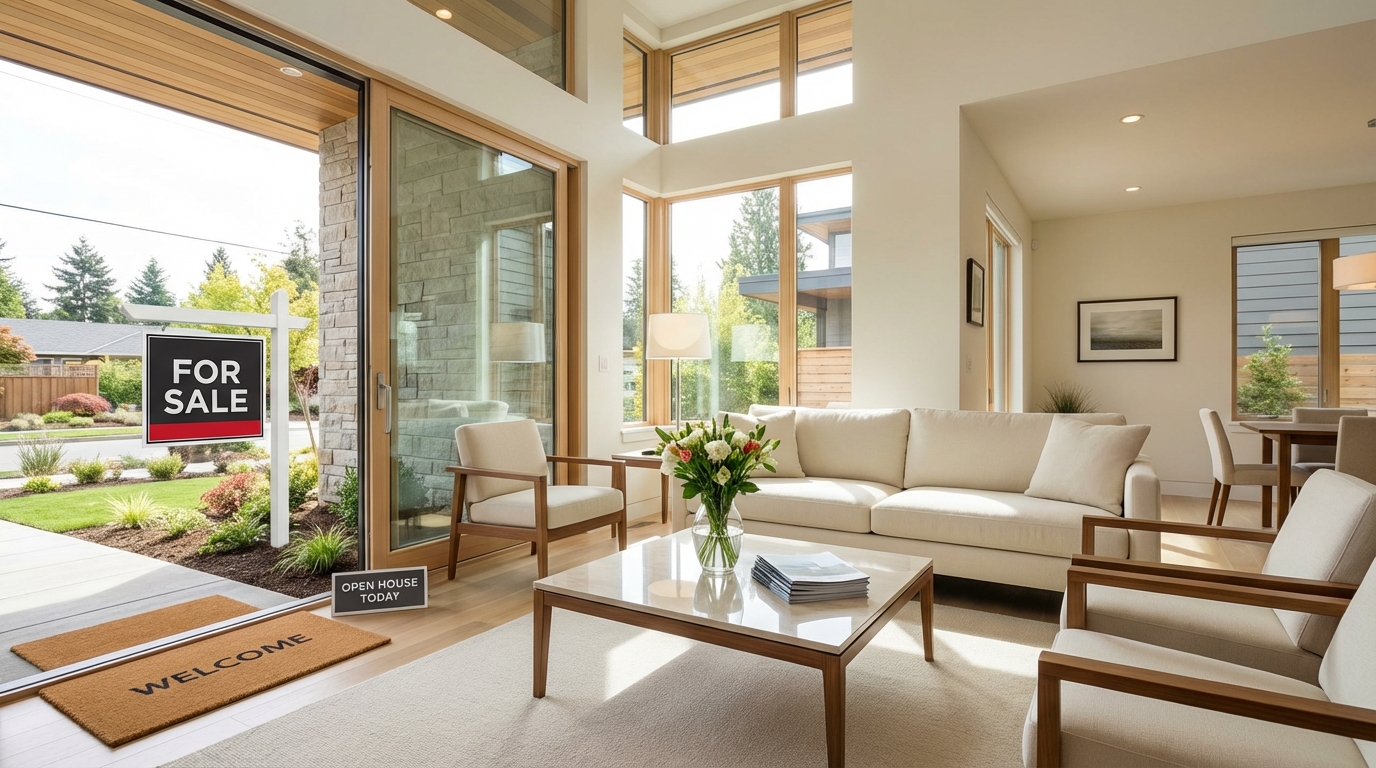
An open house isn’t just a weekend tradition—it’s a high-impact marketing event. When done right, it can create urgency, generate qualified leads, and help you sell faster (often with stronger terms). When done poorly, it becomes “just another showing” that attracts lookers, not buyers.
This guide breaks down open house strategies that work—the same playbook used in high-performing listings—optimized for sellers who want to stay in control, use data, and leverage AI-driven tools to make smarter decisions.
Start With Strategy: What a Successful Open House Is Really For
Before you print a flyer or bake cookies, get clear on your objective. The best open houses aren’t random—they’re designed to produce one of three outcomes:
- Create competition: Increase perceived demand so buyers act quickly.
- Convert fence-sitters: Turn “maybe” buyers into scheduled showings or offers.
- Validate pricing and presentation: Use buyer feedback to confirm (or adjust) your listing strategy fast.
Actionable tip: Pick one primary goal and measure it. For example: “Get 12+ groups through, 5+ qualified sign-ins, and 2+ second-showing requests within 48 hours.”
Choose the Right Timing (It’s More Strategic Than It Sounds)
Timing can influence turnout and urgency. In many markets, your first 7–10 days on market are when buyer attention is highest, so your open house should support that “launch window.”
- Best case: Host your open house the first weekend after going live.
- Two-step approach: Consider a Saturday + Sunday open house to maximize traffic and capture different buyer schedules.
- Avoid low-intent time slots: Very late afternoons can draw casual visitors and reduce qualified attendance.
Set a Price That Makes the Open House Work
Even the best open house strategy can’t overcome a mispriced home. If you’re priced too high, the event becomes a feedback session. If you’re priced strategically, it becomes a catalyst for multiple offers.
Actionable tip: Review comparable sales, active competition, and days-on-market trends. If similar homes are sitting, an open house won’t “fix” the price. If similar homes move fast, an open house can amplify that momentum.
Pre-Open House Prep: Turn Your Home Into a Product
Buyers decide how they feel about a home within minutes—sometimes seconds. Preparation is where most sellers either win big or miss the opportunity. The goal is simple: remove friction and make it easy for buyers to say “yes.”
Use the “3D” Prep Framework: Declutter, Deep Clean, Depersonalize
- Declutter: Clear countertops, reduce furniture density, and remove visual noise. Buyers need to see space, not stuff.
- Deep clean: Floors, baseboards, windows, grout, fixtures. A clean home signals care and reduces inspection anxiety.
- Depersonalize: Minimize family photos and bold décor so buyers can imagine their life there.
Pro tip: Buyers open closets and cabinets at open houses. If storage looks cramped, buyers assume the home “lives small.”
Stage for Flow, Not Just Looks
Open houses are about movement. You want guests to naturally circulate without bottlenecks.
- Create a clear path: Ensure every room feels accessible and purposeful.
- Define spaces: A small desk area becomes a “home office.” A nook becomes a “reading corner.”
- Use lighting strategically: Open blinds, turn on lights, and use warm bulbs for a consistent tone.
Fix “Small No’s” Before They Add Up
Minor issues can undermine buyer confidence—especially when they’re encountered repeatedly.
- Replace burnt-out bulbs
- Tighten loose knobs and handles
- Patch obvious nail holes
- Touch up scuffed paint (especially entryways)
- Service squeaky doors
Actionable tip: Walk your home like a buyer: start at the curb, open the front door, and narrate what you notice. Anything that triggers “they didn’t maintain this” should be fixed.
Set the Atmosphere (Without Overdoing It)
Atmosphere should feel neutral and comfortable.
- Temperature: Keep it slightly cool in summer and comfortably warm in winter.
- Scent: Aim for “no scent.” Avoid heavy fragrances. Fresh air and cleanliness outperform candles.
- Sound: Light background music is optional, but keep volume low and lyrics unobtrusive.
Marketing That Drives Attendance: Promote Like a Product Launch
One of the most effective open house strategies that work is simple: don’t rely on walk-ins. Treat your open house like an event that deserves a real marketing plan.
Build a 3-Channel Promotion Plan
To maximize qualified turnout, use three channels:
- Listing platforms: Ensure the open house time is correctly posted everywhere your listing appears.
- Social media: Promote with short videos and “what buyers love” highlights (light, layout, upgrades, yard, views).
- Local visibility: Signs at key turns, plus neighborhood/community boards where allowed.
Create Buyer-Focused Messaging (Not Feature Dumps)
Many open house posts read like a spec sheet. Instead, translate features into outcomes.
- “South-facing windows = natural light all day.”
- “Split floor plan = privacy for guests or a home office.”
- “Recent roof/HVAC = fewer big-ticket surprises.”
Actionable tip: Choose 3 “headline” benefits and repeat them across your listing description, flyers, and posts.
Use High-Quality Visuals (This Is Non-Negotiable)
Open house attendance is directly influenced by how your home looks online. Most buyers decide whether to visit based on photos and short clips.
- Lead with hero images: Best exterior, main living area, kitchen, primary bedroom.
- Add a walkthrough video: Even a steady, well-lit phone video can boost interest.
- Show the lifestyle: Patio, yard, nearby amenities, view corridors.
Open House Execution: Convert Visitors Into Offers
The day of the open house is about two things: experience and conversion. A great experience keeps buyers in the home longer. Great conversion turns that interest into next steps.
Use a Simple, Effective Setup Checklist
- Open all interior doors (rooms feel more inviting).
- Turn on all lights and replace any dim bulbs.
- Secure valuables and medications.
- Put away pet items and manage pet logistics.
- Place printed info sheets in a visible spot.
- Ensure strong Wi-Fi (buyers will look up comps and neighborhoods on-site).
Master the Sign-In Without Killing the Vibe
Sign-in is where many sellers lose momentum. Make it easy, not awkward.
- Offer a QR code sign-in (fast, contactless).
- Ask for name + email/phone and one qualifying question like: “Are you already pre-approved?”
- Explain the benefit: “We’ll send the disclosures, upgrades list, and any offer updates.”
Actionable tip: If someone refuses to sign in, don’t force it. Keep them engaged and invite them to take an info sheet with a QR code to follow up later.
Guide the Tour With “Soft Direction”
Visitors want freedom, but they also appreciate guidance. Aim for a light touch:
- Give a 15-second orientation: “Feel free to start in the living room and loop through the kitchen; the primary suite is at the back.”
- Point out hidden value: insulation upgrades, smart thermostat, new electrical panel, permitted additions.
- Share context: utility costs, what stays (appliances), and any recent improvements.
Use “Offer Readiness” Prompts (Without Pressure)
You can create urgency ethically by clarifying timelines and next steps.
- “We’re collecting feedback today and reviewing interest this evening.”
- “Disclosures are available via QR code if you’d like to take a closer look.”
- “If you’re considering an offer, we can share preferred timelines and terms.”
After the Open House: Follow-Up Is Where Deals Are Won
Many sellers put all the energy into the event and none into what comes after. In practice, fast, structured follow-up is one of the most reliable open house strategies that work—because it captures buyers while excitement is still high.
Follow Up Within 2–4 Hours
Send a short message to everyone who signed in:
- Thank them for coming
- Share a link to disclosures / property details
- Ask one question: “Would you like to schedule a private showing or have questions about terms?”
Use Feedback to Adjust Quickly (Not Emotionally)
Track comments in categories so you can spot patterns:
- Price: “Feels high for the street.”
- Condition: “Carpet needs replacement.”
- Layout: “Kitchen feels closed off.”
- Competition: “We’re also looking at X down the road.”
Actionable tip: If you hear the same concern 3+ times, treat it as signal. Fix what you can (staging/repairs) or adjust pricing/terms strategically.
Keep Momentum With a Next-Step Plan
If interest is strong, create a clear path forward:
- Announce an offer deadline (only if turnout and interest justify it).
- Schedule second showings quickly for top prospects.
- Make terms easy to understand (what you prefer for closing date, contingencies, inclusions).
Common Open House Mistakes (and the Better Alternative)
- Mistake: Hosting before the home is photo-ready.
Better: Launch with strong visuals, then open house the first weekend. - Mistake: No sign-in or follow-up system.
Better: QR sign-in + same-day message + tracked feedback. - Mistake: Overpowering scents and “hard sell” talk.
Better: Neutral environment + confident, helpful info. - Mistake: Random signs or poor directions.
Better: Place signs at decision points and test the drive route yourself. - Mistake: Treating open house traffic as the goal.
Better: Treat qualified next steps (second showings, disclosures requested, offer conversations) as the goal.
Conclusion: Make Your Open House a System, Not a Guess
The open house strategies that work consistently are the ones built on preparation, smart promotion, smooth execution, and fast follow-up. When you treat your open house like a product launch—and measure results—you create the conditions buyers need to act with confidence.
Ready to run a modern, data-driven open house? AIRE helps you plan your launch, generate buyer-friendly materials, manage sign-ins and follow-ups, and use AI-powered insights to refine pricing, positioning, and next steps—so you can sell on your terms with clarity and control.