
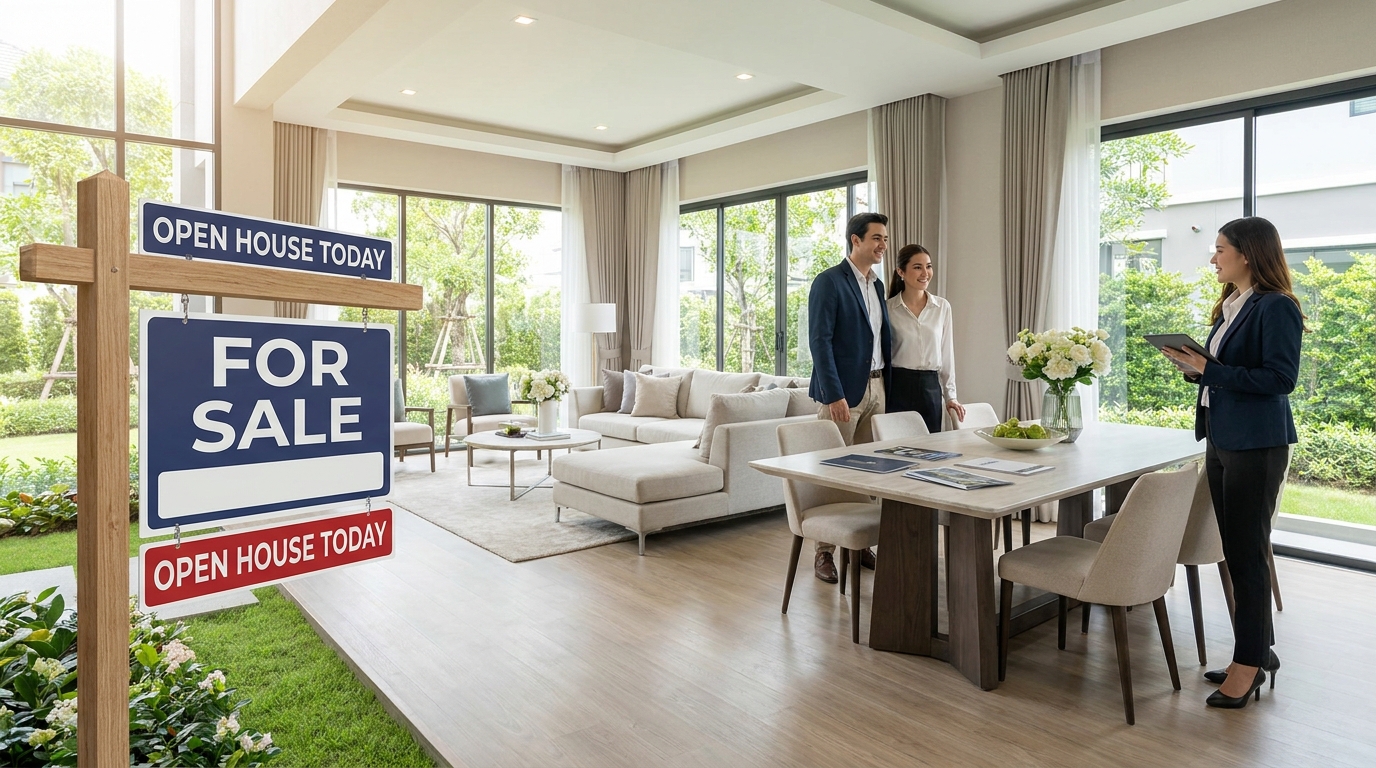
An open house isn’t just a Sunday tradition—it’s a high-impact marketing event. When executed well, it can create urgency, gather real buyer feedback fast, and generate offers with better terms. When executed poorly, it can turn into a slow trickle of unqualified traffic that leaves you wondering if your home is “not landing.”
This guide breaks down open house strategies that work in today’s market—using data-backed best practices, buyer psychology, and practical checklists you can implement immediately. Whether you’re selling independently or simply want more control over the process, these tactics help you run a polished, conversion-focused open house that moves your sale forward.
1) Set the Foundation: Timing, Pricing Signals, and Your Goal
Before you print a flyer or bake cookies, clarify what success looks like. The most effective open houses have a clear objective: generate offers, collect high-quality leads, validate pricing, or re-energize a listing that’s gone quiet.
Choose the right timing (it’s not always Sunday)
Weekend afternoons are popular because they’re convenient, but convenience isn’t the same as conversion. Consider:
- Launch weekend: If your home is newly listed, hosting your open house within the first 3–7 days can maximize momentum and “new listing” attention.
- Twilight open house (weekday evening): Great for professionals and for showcasing lighting, outdoor spaces, and neighborhood ambiance.
- Two-step approach: A shorter first open house to test messaging + a second one the following weekend with improvements based on real feedback.
Use pricing cues that reduce hesitation
Buyers decide how serious to be within minutes—often based on whether the home “fits” their expectations for the price range. Your open house should reinforce value:
- Anchor value visually: Highlight recent upgrades (roof, HVAC, windows) with a simple one-page “Home Highlights” sheet.
- Remove confusion: If there are known quirks (e.g., shared driveway, older electrical), disclose clearly and provide context (quotes, permits, or documentation).
- Keep comparisons in mind: Buyers are mentally stacking your home against others they saw that day. Make it easy to understand what they’re getting here.
Define your goal for the event
Pick one primary goal and one secondary goal:
- Primary: Generate 1–2 strong offer conversations within 72 hours.
- Secondary: Collect at least 10 qualified leads (buyers who want disclosures, a showing, or neighborhood info).
This matters because it changes what you emphasize: urgency and next steps for offer-focused events; information and lead capture for pipeline-building events.
2) Pre-Open House Prep That Actually Moves the Needle
Preparation isn’t about perfection—it’s about reducing buyer friction. Every unanswered question or visible maintenance issue adds “mental cost” and lowers the price a buyer is willing to pay.
The 48-hour checklist (simple, high ROI)
- Deep clean the high-signal zones: kitchen surfaces, sinks, bathrooms, floors, and windows. Buyers interpret cleanliness as a proxy for maintenance.
- Declutter for flow: clear countertops, remove oversized furniture, open pathways. Spaciousness is one of the most consistent drivers of perceived value.
- Fix small negatives: loose handles, squeaky doors, burned-out bulbs, scuffed baseboards. Tiny issues stack into a “what else is wrong?” feeling.
- Control smell: avoid heavy fragrances. Aim for neutral and fresh (ventilation, clean filters, trash out, subtle natural scent).
- Light it right: open blinds, turn on all lights, use consistent bulb temperature where possible.
Stage for buyer decision-making (not for your taste)
Effective staging helps a buyer answer two questions quickly: “Can I live here?” and “Is this home worth the price?”
- Use “purpose clarity”: every room should have an obvious function (office, guest room, dining area). Avoid multipurpose confusion.
- Create photo-ready vignettes: a made bed, fresh towels, a simple table setting—small touches that reinforce care.
- Remove hyper-personal items: family photos, highly specific décor, collections. You want buyers imagining themselves, not touring someone else’s life.
Prepare an “Open House Info Pack” buyers will keep
Most open house handouts are thrown away because they’re generic. Yours should reduce uncertainty and make the next step easy.
- One-page highlights sheet: beds/baths, square footage, top 8 features, recent upgrades with dates.
- Monthly cost snapshot: estimated taxes, utilities range, HOA (if applicable). Clarity builds confidence.
- Neighborhood cheat sheet: commute options, parks, walkability, nearby amenities.
- QR codes: link to disclosures, 3D tour, video walkthrough, and a “Request a private showing” form.
3) Marketing Before the Open House: Get the Right People in the Door
Traffic alone doesn’t sell homes—qualified traffic does. The best open house strategies start days earlier with smart distribution and clear messaging.
Write an open house announcement that earns clicks
Skip vague lines like “Don’t miss this!” Instead, name the specific reasons your home is different:
- Feature + benefit: “Sunlit kitchen + large island for entertaining”
- Location advantage: “5 minutes to downtown / top-rated schools nearby”
- Unique proof: “New roof (2023), updated HVAC (2022)”
Use a simple marketing stack (fast, repeatable)
- Online listing update: Make sure the open house date/time is correct everywhere your listing appears.
- Social posts: Post 2–3 times (48 hours before, day before, morning of). Include short video clips—video typically outperforms static images for engagement.
- Neighborhood outreach: Neighbors are referral engines. A “neighbors welcome” angle can bring motivated friends and family of locals.
- Directional signage: Place signs at key turns and high-traffic intersections. Keep them consistent, readable, and compliant with local rules.
Offer a virtual option to multiply reach
Not every serious buyer can attend in person. Add a QR code for a 3D tour or a short video walkthrough, and consider a scheduled 10-minute live virtual “micro-tour” during the open house window. This captures out-of-town buyers and busy professionals while your listing is top-of-mind.
4) Day-Of Execution: Convert Visitors Into Offers
Think of your open house as a guided experience. Your job is to create comfort, answer questions proactively, and move interested buyers to a next step before they leave.
Set the environment: calm, bright, and easy to navigate
- Temperature: keep it comfortable; overheated homes reduce dwell time.
- Sound: light background music at a low volume can make the space feel welcoming without distracting.
- Flow: place subtle “Start Here” guidance at entry so visitors don’t miss key rooms.
- Security: store or lock away medications, valuables, small electronics, mail, and personal documents.
Use a sign-in system that doesn’t feel awkward
Lead capture is one of the biggest advantages of an open house—if you do it respectfully.
- Best approach: a simple digital sign-in via QR code that says: “Get disclosures + updates after the open house.”
- Ask for: name, email/phone, and one qualifying question (e.g., “Are you already pre-approved?”).
- Be transparent: tell visitors you’ll only send relevant updates and documents.
Have a script—but keep it human
You don’t need a sales pitch. You need a consistent, helpful flow:
- Welcome: “Feel free to look around—let me know what you’d like to learn more about.”
- Context: “Two quick highlights: the roof was replaced in 2023, and the backyard was redesigned for low maintenance.”
- Engage: “What’s most important to you in a home—space, commute, or move-in ready?”
- Advance: “If you’d like, I can send disclosures and set up a private showing to revisit anything.”
Answer the questions buyers actually use to decide
- Why are you selling? Share a concise, positive reason.
- How old are the big-ticket items? Roof, HVAC, water heater, windows, foundation work.
- What are the monthly costs? Taxes, HOA, utilities, insurance estimates where possible.
- What’s the timeline? Desired closing date, flexibility, and any contingencies.
Pro tip: If you don’t know an answer, say so—and commit to sending the exact details afterward. Accuracy builds trust.
Create urgency ethically
Urgency comes from clarity, not pressure. If you have real signals (multiple private showings booked, strong interest), it’s okay to communicate them. Pair urgency with a clear path:
- “We’re hosting private showings this week—if you’d like a second look, let’s schedule it today.”
- “If you want to be considered early, I can share the disclosure package now.”
5) Follow-Up: Where Most Open Houses Win (or Fail)
A surprising amount of open house value happens after the event. Buyers often need one more touchpoint—disclosures, a second visit, or a cost clarification—to move from “interested” to “ready.”
Follow-up timeline (simple and effective)
- Within 2 hours: Send disclosures + the highlights sheet to everyone who signed in.
- Within 24 hours: Message your top prospects personally: “Any questions after your visit? Want a private showing?”
- Within 72 hours: If no offer, share a helpful update: inspection receipts, upgrade list, or a quick video answering common questions.
Use feedback to improve your listing fast
Track patterns. If three visitors mention the same concern, it’s data—not noise. Common high-impact adjustments include:
- Pricing alignment: If buyers love the home but hesitate on price, revisit comps and positioning.
- Presentation tweaks: Better lighting, less furniture, improved curb appeal.
- Messaging updates: Rewrite listing copy to emphasize the features buyers reacted to most.
Conclusion: Run an Open House Like a Modern Sales Funnel
The open house strategies that work today are not about hoping the “right buyer” wanders in. They’re about building momentum with smart timing, presenting your home with clarity, marketing to the right audience, and following up quickly with the information buyers need to act.
Ready to make your next open house more strategic—and less stressful? AIRE helps you manage the entire selling process with AI-powered tools, including pricing insights, listing optimization, disclosure sharing, lead capture workflows, and step-by-step transaction guidance—so you can sell confidently without relying on traditional agents. Explore AIRE and turn your open house into real offers.