
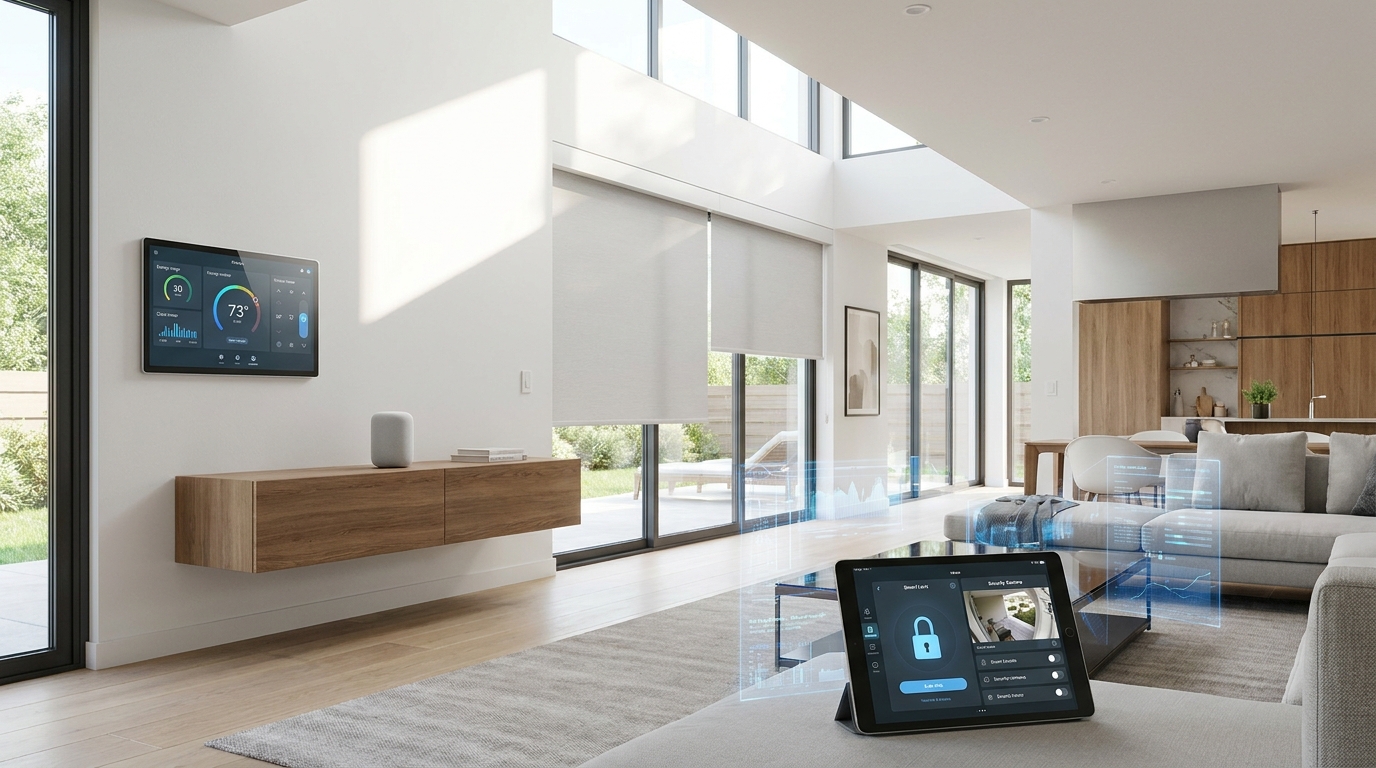
Smart home features aren’t a “nice-to-have” anymore—they’re a decision-maker. Today’s buyers expect homes to be secure, efficient, and easy to control from a phone (or voice) without adding complexity. The best upgrades aren’t just flashy gadgets; they’re the features that reduce monthly costs, simplify routines, and increase peace of mind. If you’re preparing to sell—or buying and planning upgrades—this guide breaks down the smart home features buyers want most and how to prioritize them for maximum value.
What’s driving demand for smart home features?
Buyer interest in smart-home tech is rising for three practical reasons: security, energy savings, and convenience. Remote work and flexible schedules have increased time spent at home, while energy prices and climate concerns push buyers toward efficiency. Meanwhile, mainstream adoption of voice assistants, mobile apps, and Wi‑Fi devices means buyers increasingly view smart tech as standard—not specialty.
Actionable takeaway: Buyers are most impressed when smart features feel integrated and low-maintenance, not when there’s a confusing patchwork of apps.
Top smart home features buyers want (and why they matter)
Not all smart upgrades are equal. The highest-performing features tend to fall into a few categories that map to real buyer priorities.
1) Smart security that’s simple and credible
Security is consistently one of the strongest motivators for smart home adoption. Buyers like features that prevent problems and provide proof when something happens.
- Smart doorbells with motion alerts and package detection
- Smart locks (keypad, app access, temporary codes for guests/service providers)
- Outdoor cameras with night vision and activity zones
- Window/door sensors and glass-break sensors
- Professional-style monitoring options (even if the buyer chooses self-monitoring)
Tip: If you’re selling, emphasize how security is managed: “single app,” “local storage vs. cloud,” and “privacy controls.” Buyers increasingly ask about data handling.
2) Energy-efficient smart thermostats and HVAC optimization
Energy features are appealing because they can pay for themselves. Smart thermostats are one of the most recognized and trusted upgrades, especially when paired with usage insights.
- Smart thermostats with learning schedules and remote control
- Room sensors to balance comfort across the home
- Heat pump optimization settings and smart scheduling
- Filter change reminders and maintenance alerts
Practical selling angle: If you can show year-over-year energy usage trends (even a few months of data), it turns “smart” into a measurable benefit.
3) Smart lighting that improves comfort and cuts waste
Lighting is a “daily touchpoint” feature—buyers notice it immediately during showings. The most desirable setups are simple, reliable, and not overly customized.
- Smart switches/dimmers (often preferred over individual bulbs for whole-room control)
- Occupancy/vacancy sensors for hallways, bathrooms, garages
- Exterior smart lighting for safety and curb appeal
- Scenes like “Evening,” “Movie,” and “Away”
Tip: Use warm, consistent color temperatures (e.g., 2700K–3000K) and avoid overly dramatic color-changing demos unless the home is clearly marketed as tech-forward.
4) Smart smoke/CO detection and leak prevention
Safety tech that prevents expensive damage is a major plus—especially in markets where insurance costs are rising. Leak detection is a standout because it can protect cabinets, floors, and foundations.
- Smart smoke/CO detectors with phone alerts
- Water leak sensors near water heaters, sinks, washers, and HVAC condensate lines
- Automatic water shutoff valves (high-impact upgrade for risk reduction)
Actionable tip: If you add leak sensors, label their locations in a simple one-page “Smart Home Map” for buyers. It signals thoughtful maintenance.
5) High-performance connectivity (Wi‑Fi matters more than gadgets)
Even the best devices fail if connectivity is weak. Many buyers now ask about internet speed, dead zones, and work-from-home readiness. A strong network is often the hidden “smart home feature” that seals the deal.
- Mesh Wi‑Fi (especially for multi-level homes)
- Ethernet backhaul where possible for stability
- Structured wiring panels and clean cable management
- Smart home hubs that reduce device conflicts
Tip: If you’ve installed mesh Wi‑Fi, list the system specs and coverage area in your home details. Buyers appreciate clarity.
6) EV charging and energy management
EV adoption continues to shape buyer expectations. A garage with charging infrastructure can be a strong differentiator, especially in suburban markets.
- Level 2 EV charger (or at least a 240V outlet with capacity)
- Energy monitoring for whole-home usage insights
- Solar + smart inverter monitoring (where applicable)
Practical note: Buyers love “ready-to-install” even if they don’t drive an EV yet. Electrical capacity and panel information reduce uncertainty.
7) Voice and app control—when it’s optional, not required
Many buyers like voice control, but they don’t want to be forced into it. The winning approach is: everything works normally and can be automated.
- Voice assistant compatibility (where desired)
- Unified control via one or two core apps
- Simple automations: wake/sleep, away/home, sunrise/sunset schedules
Tip: Avoid stacking multiple assistants and overlapping ecosystems unless you can clearly explain the logic. Buyers value simplicity over novelty.
How to choose smart upgrades that actually add value
Smart home upgrades are most valuable when they’re reliable, easy to transfer, and clearly beneficial. Use the checklist below to avoid common mistakes.
The “buyer-ready” smart home checklist
- Prioritize essentials: security, thermostat, leak detection, and Wi‑Fi improvements typically outperform niche gadgets.
- Choose durable installs: smart switches, thermostats, and shutoff valves tend to feel more “built-in” than temporary devices.
- Keep it standardized: stick to one ecosystem when possible to reduce app overload.
- Document everything: include device list, warranties, model numbers, and reset instructions.
- Plan for handoff: ensure devices can be factory reset and transferred without friction.
What to avoid (it can backfire during negotiations)
- Over-customized automations that feel confusing or fragile
- Unsupported or obscure brands with poor update history
- Devices tied to personal accounts without a clean transfer process
- Too many subscriptions that inflate ongoing costs
Actionable tip: Create a simple “Smart Home Quick Start” card for showings: Wi‑Fi coverage, key devices, and top benefits (security, savings, comfort).
How to market smart home features so buyers notice
Even great upgrades can be overlooked if they aren’t communicated clearly. The goal is to translate technology into outcomes: lower bills, safer deliveries, fewer worries, and better daily living.
Use benefit-first descriptions in your listing
- Instead of: “Smart thermostat”
- Say: “Smart thermostat with remote control + energy-use insights for more efficient heating/cooling.”
- Instead of: “Ring camera”
- Say: “Video doorbell for package monitoring, motion alerts, and visitor verification.”
Show proof where possible
- Energy snapshots: monthly utility averages or thermostat reports
- Insurance-friendly upgrades: leak detection and shutoff documentation
- Network readiness: mesh Wi‑Fi coverage and ISP options
Make the buyer’s transition effortless
Smart home tech can raise one big fear: “Will I be locked out of my own house because of someone else’s settings?” Reduce that anxiety by preparing a clean handoff.
- Factory reset devices after closing (or as part of the agreed handover plan).
- Remove personal data from hubs, cameras, and voice assistants.
- Provide a device inventory with locations and instructions.
- Confirm what conveys (devices that stay) vs. what you’ll remove.
Smart home ROI: where to invest first
If you’re budgeting, focus on upgrades that buyers understand immediately and that reduce real-world risk or cost. A practical priority order many sellers follow:
- Connectivity: mesh Wi‑Fi + stable coverage
- Security: doorbell + smart lock + exterior lighting
- Energy: smart thermostat + sensors
- Water protection: leak sensors + (optional) shutoff valve
- EV readiness: 240V outlet or Level 2 charger (market-dependent)
Market nuance matters: In dense urban areas, smart access control and package security can be a top driver. In suburban areas, energy management, outdoor cameras, and EV charging often stand out more.
Conclusion: The best smart homes feel effortless
Buyers don’t want a house that requires an IT degree—they want a home that’s safe, efficient, and easy to live in. The smartest move is to invest in reliable, high-impact features (security, energy, leak prevention, and connectivity), document them well, and market them in clear benefit-first language.
Ready to buy or sell with confidence—without the traditional friction? AIRE helps you navigate the transaction independently using AI-powered tools to organize disclosures, streamline tasks, and keep every step transparent—so your smart home features translate into real buyer value from listing to close.