
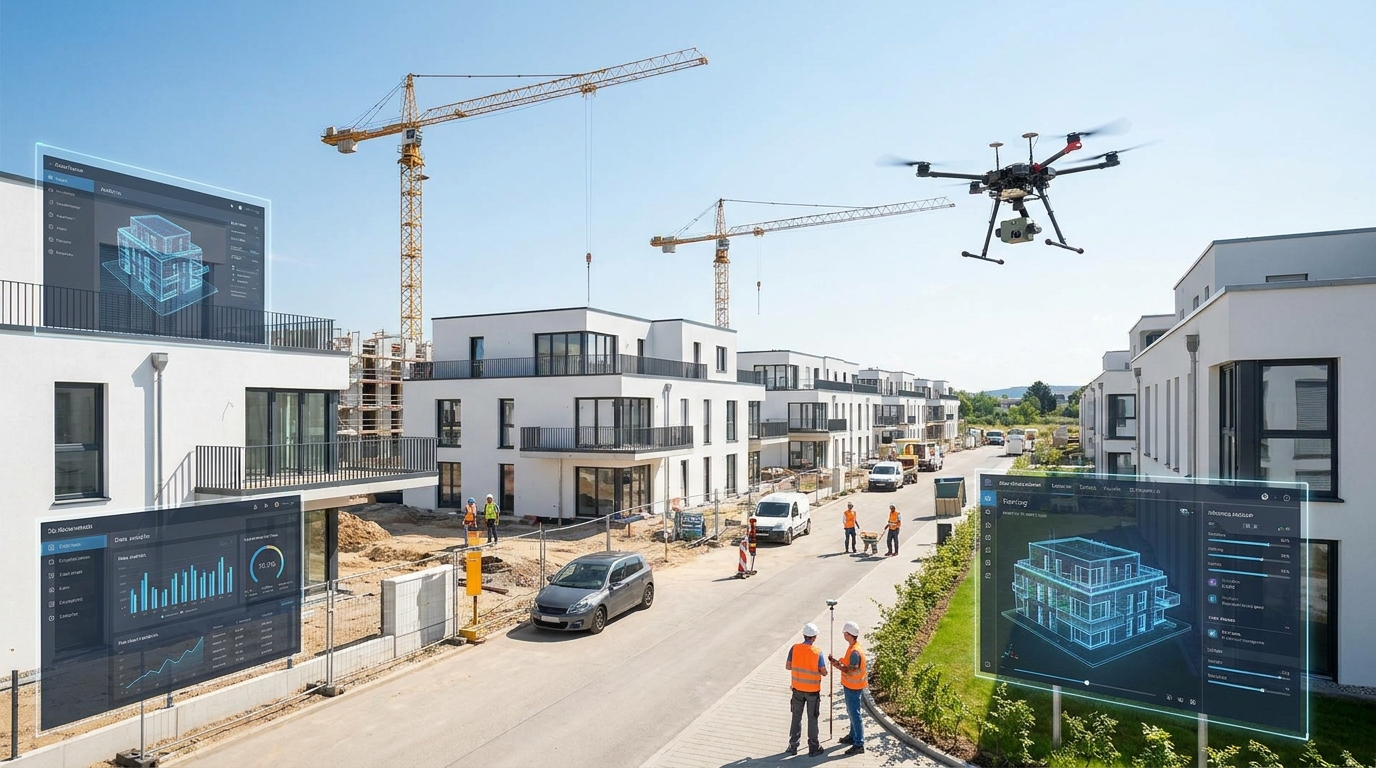
Real estate is no longer powered primarily by phone calls, paperwork, and gut instinct. Today, technology disruptions in real estate are reshaping how homes are priced, marketed, negotiated, and closed—often faster than the industry can update its playbook. The result is a major shift in who holds the advantage: increasingly, it’s the buyer or seller who knows how to use data and digital tools well.
This post breaks down the biggest proptech trends driving change, what they mean for consumers, and how you can use modern tools (including AI) to run a more informed, independent transaction.
1) The new real estate stack: from analog workflows to digital-first
Historically, real estate transactions relied on fragmented systems: separate tools for listings, documents, disclosures, showings, inspections, title, and financing. That fragmentation created delays, increased costs, and made it hard for everyday people to see what was happening in real time.
Technology disruptions in real estate are consolidating this “stack” into connected platforms that offer:
- Instant access to market data (pricing trends, neighborhood comps, days on market)
- Automated document workflows (forms, disclosures, e-signatures, version tracking)
- Digital communication trails (time-stamped negotiation, tasks, reminders)
- Faster coordination across inspection, escrow, title, and lenders
What this means for you
Digital-first real estate makes the transaction more transparent and easier to manage—if you use the tools intentionally. Buyers can validate pricing and risk earlier, and sellers can prove value with data instead of relying on vague market narratives.
Practical tip: build your “deal dashboard”
Create a simple checklist (or workspace) that tracks:
- Target timeline (offer date → close date)
- Key contingencies and deadlines
- Negotiation items (repairs, credits, appraisal gaps)
- Document status (signed/awaiting/updated)
Modern platforms can automate much of this, reducing missed deadlines and costly surprises.
2) AI in real estate: from search to pricing to negotiation
AI is one of the most important technology disruptions in real estate because it changes decision-making. Instead of relying solely on manual research, AI can synthesize large datasets quickly, highlight patterns, and propose next best actions based on your goals.
Where AI is already changing the game
- Smarter home search: AI-assisted filters interpret preferences (commute time, school priorities, walkability, budget) and surface better matches.
- Pricing intelligence: models analyze comparable sales, micro-market shifts, seasonality, and listing signals to support stronger pricing decisions.
- Listing optimization: AI can suggest photo order, description language, and feature emphasis based on what drives engagement.
- Risk detection: systems can flag common red flags in disclosures, inspection items, or unusual terms in contract drafts.
- Negotiation support: AI can help you structure offers and counteroffers with data-backed justification (e.g., comps, repair estimates, concessions norms).
How to use AI without over-trusting it
AI is powerful, but it’s not magic. The best outcomes come from pairing AI insights with your real-world constraints. Use AI to generate options and identify trade-offs—then decide based on your priorities.
Actionable checklist: questions to ask your AI tools
- Pricing: “What are the closest comps within 0.5 miles and 90 days, and how do they differ?”
- Offer strength: “What offer terms improve acceptance odds without increasing price?”
- Negotiation: “Which concessions are most common in this market right now?”
- Risk: “Which inspection findings typically lead to renegotiation or credits?”
- Timeline: “What tasks are critical this week to avoid delays to closing?”
3) Digital transactions: e-signatures, remote closings, and automation
Another major disruption is the move from paper-heavy closings to end-to-end digital transactions. E-signatures and secure document portals have already changed expectations, and the next wave is deeper workflow automation: fewer manual handoffs, better audit trails, and faster turnaround.
Key transaction technologies accelerating closings
- E-signature and identity verification to reduce friction and prevent fraud
- Secure document vaults for disclosures, addenda, and receipts
- Automated reminders for contingencies and deadlines
- Remote online notarization (RON) where supported
- Integrated payments for earnest money and fees (market-dependent)
Practical tip: reduce closing delays with a “friction audit”
Before you’re under contract, identify common delay points and preempt them:
- Document readiness: gather disclosures, permits (if applicable), HOA docs, and repair receipts early.
- Financing alignment: ensure your pre-approval matches the property type (condo rules, appraisal risks, etc.).
- Inspection planning: schedule quickly and decide ahead of time what issues you’ll negotiate versus accept.
- Communication: centralize updates in one place so you don’t lose context across texts/emails.
4) Proptech platforms and data transparency: the consumer advantage
Real estate used to be information-asymmetrical. Today, platforms provide increasingly granular visibility into pricing, neighborhood performance, climate risk, insurance pressure, and even likely maintenance costs. This shift matters because better data produces better leverage—especially in negotiations.
Data categories that matter more than ever
- Micro-market comps: not just city averages, but block-by-block pricing and days-on-market trends
- Demand signals: saves, views, showing activity, price-drop patterns
- Risk overlays: flood/fire risk, heat exposure, storm history, local infrastructure
- Ownership costs: taxes, insurance, HOA, utilities, and repair/maintenance expectations
- Regulatory and zoning signals: ADU potential, short-term rental rules, redevelopment activity
Practical tip: do a “total cost of ownership” snapshot
When evaluating a home, don’t stop at purchase price. Build a quick estimate including:
- Monthly principal + interest (loan scenario)
- Property taxes and insurance
- HOA dues (if any)
- Expected maintenance reserve
- Utility cost range
This helps you compare homes fairly and prevents budget surprises after closing.
5) Blockchain and tokenization: disruption with a longer runway
Blockchain is often discussed as a future foundation for property records, smart contracts, and tokenized ownership. While adoption is uneven, the underlying promise is compelling: a more verifiable chain of custody for property data and potentially faster settlement.
Where blockchain could impact real estate
- Title and recordkeeping: tamper-resistant audit trails for ownership and liens
- Smart contracts: conditional automation (e.g., releasing funds when milestones are met)
- Tokenization: fractional ownership structures (most relevant to investment use cases)
Reality check
Many markets still rely on legacy recording systems and institutional processes that don’t change quickly. But the direction is clear: verification, transparency, and automation will keep increasing, and blockchain-inspired systems may become part of the infrastructure over time.
6) The biggest shift: empowerment through independence
The most important takeaway from technology disruptions in real estate isn’t any single tool—it’s the broader rebalancing of power. When you can access pricing intelligence, automate paperwork, and run a disciplined transaction workflow, you’re no longer dependent on gatekeepers to make progress.
How to modernize your next transaction (step-by-step)
- Start with data: define your must-haves and your walk-away conditions, then validate pricing with comps and trend lines.
- Use AI for clarity: summarize disclosures, compare offer strategies, and generate negotiation options tied to objective facts.
- Systematize the process: centralize tasks, documents, and deadlines in a single workflow to reduce errors.
- Negotiate with evidence: anchor requests in inspection findings, market norms, and comparable sales—not vague opinions.
- Plan for closing early: pre-schedule inspection windows, line up required documentation, and track contingency dates.
Conclusion: tech is rewriting real estate—use it to your advantage
Technology disruptions in real estate are making transactions faster, more transparent, and more data-driven. AI is transforming how people search, price, and negotiate. Digital workflows are reducing friction at closing. And emerging infrastructure like blockchain may further streamline verification and settlement over time.
The opportunity is simple: if you embrace these tools, you can buy or sell with more confidence, better information, and a process you control.
Ready to put modern real estate tech to work? AIRE helps you handle your transaction independently with AI-powered guidance—supporting smarter pricing, clearer next steps, streamlined paperwork, and negotiation insights so you can move from listing to closing with confidence.