
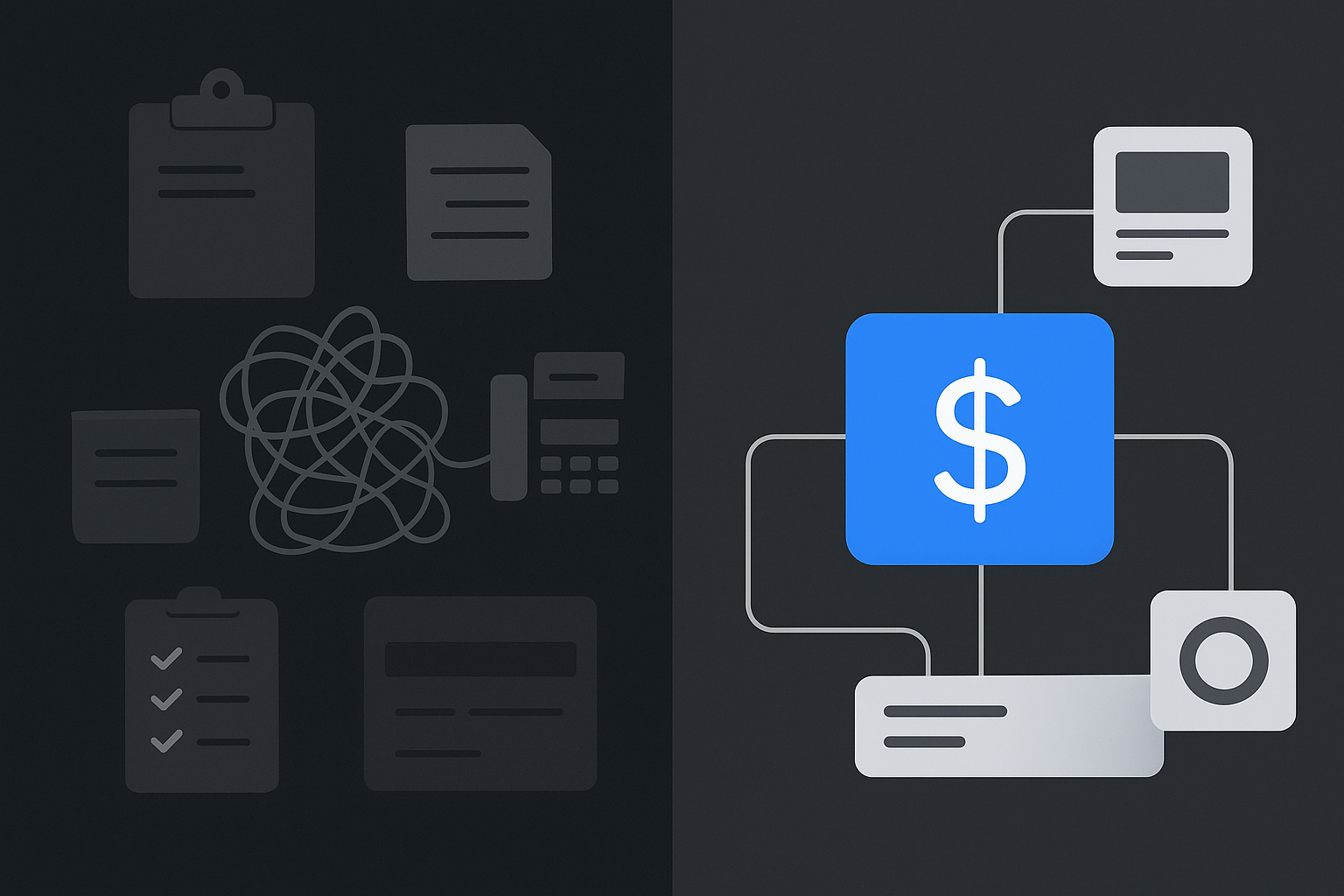
For decades, the real estate industry has operated under the same assumption:
if you want to buy or sell a home, you need a real estate agent and you need to pay them around 5–6% of the transaction.
That assumption made sense in 1985.
It makes almost no sense today.
Despite massive advances in technology, data access, and consumer behavior, the traditional real estate brokerage model has barely changed. Sellers are still paying tens of thousands of dollars in commissions. Buyers are still pushed into representation they didn’t meaningfully choose. And agents are still incentivized in ways that don’t always align with their clients’ best interests.
How the Traditional Brokerage Model Was Built
To understand why the model no longer works, you have to understand why it existed in the first place.
Before the internet:
Listings were controlled by brokers
Market data was inaccessible to consumers
Buyers relied entirely on agents to discover properties
Sellers needed agents to reach buyers at all
Agents were gatekeepers. Commissions paid for access, distribution, and expertise.
Today:
Listings are public
Buyers find homes on their own
Pricing data is everywhere
Transactions are mostly digital
Yet the compensation structure is exactly the same.
The 6% Commission No Longer Reflects the Work Being Done
Let’s be direct.
On a $1,000,000 home sale, a seller typically pays $50,000–$60,000 in commissions.
What does that actually pay for?
Uploading a listing
Coordinating showings
Communicating with the other side
Managing paperwork
Guiding the transaction to close
These tasks are:
Repetitive
Process-driven
Largely the same for a $300K home and a $3M home
They are not 10x harder because the price is 10x higher.
Yet the cost scales linearly with price.
A System of Misaligned Incentives
The traditional brokerage model creates incentive problems on both sides of the transaction.
Sellers pay the buyer’s agent
This distorts choice and creates hidden pressures in how homes are marketed and shown.
Agents are paid based on price, not outcome
A slightly faster close often matters more to an agent than negotiating the last 2–3% for the client.
Buyers are nudged into representation “because it’s free”
Except it isn’t. It’s baked into the price.
None of this is malicious.
It’s structural.
And structural problems require structural solutions.
Real Estate Didn’t Fail to Innovate — It Failed to Rethink Itself
Most real estate “innovation” over the last 20 years focused on:
Lead generation
CRM tools
Marketing software
Agent productivity
In other words: tools to help agents operate within the same broken system.
Very few companies asked the harder question:
What if the system itself is outdated?
Other industries already answered that question.
Travel
Banking
Trading
Insurance
Real estate is simply late.
The Truth: Most of a Real Estate Transaction Is Software
If you break a transaction down step by step, most of it is:
Data processing
Rule-based decision-making
Document generation
Status tracking
Communication routing
These are not human strengths.
They are software problems.
And now, with AI, they can be automated end-to-end — more accurately, more consistently, and at a fraction of the cost.
Why Replacing Agents Isn’t the Point
This is where many people get it wrong.
The goal isn’t to “replace” agents.
The goal is to replace unnecessary manual workflows and eliminate commissions that exist only because better systems didn’t exist before.
The goal is to make them obsolete.
What doesn’t make sense is paying tens or hundreds of thousands of dollars for processes that can be automated.
How AIRE Fixes What’s Broken
AIRE is a licensed, full-service AI real estate brokerage built from the ground up around this reality.
Instead of:
Commission-driven incentives
Manual workflows
Opaque pricing
AIRE uses AI to:
Automate listing creation and distribution
Handle buyer and seller communication
Manage transaction steps and compliance
Guide deals from listing to close
The result:
Lower costs
Faster transactions
Incentives aligned with the client, not the commission
The Future of Real Estate Is System-First
The traditional brokerage model survived for decades because there was no alternative.
Now there is.
As AI replaces manual coordination and information asymmetry disappears, commission-heavy models will feel increasingly out of place, not because people dislike agents, but because better systems exist.
AIRE is built for that future.
And the future is already here.