
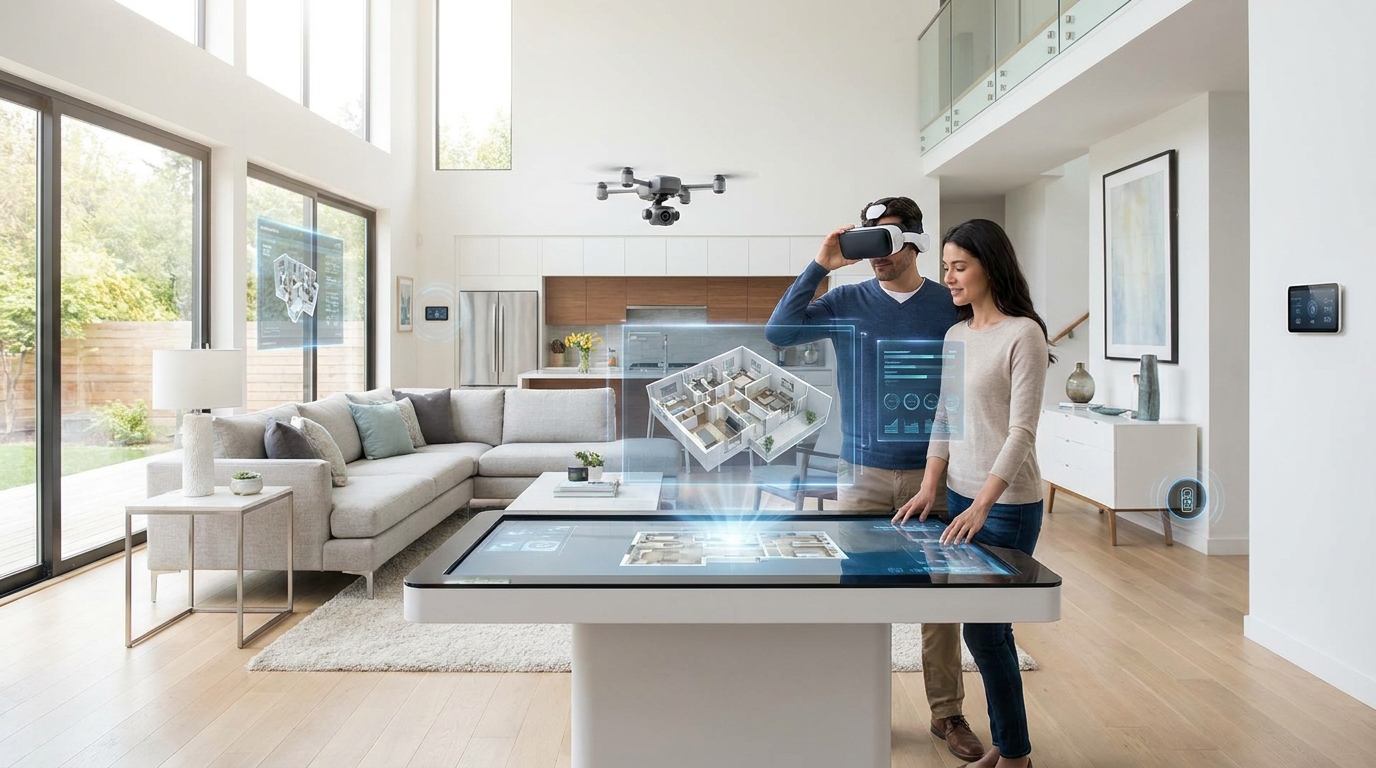
Home showings used to be a simple trade: you gave up your weekend, and in return you got a better feel for a property. But in a world where buyers relocate across states, sellers juggle busy schedules, and decisions move at internet speed, that trade no longer makes sense.
Virtual tours are quickly becoming the default way to screen, compare, and shortlist homes—before anyone steps through the front door. And as AI gets better at understanding what you want (and what a home actually offers), virtual showings are evolving from “nice-to-have” marketing into a core part of how real estate transactions happen.
Why Virtual Tours Are Becoming the New First Showing
Virtual tours aren’t just about convenience—they solve real friction in the buying and selling process. The modern buyer expects faster access to information, and the modern seller needs ways to reduce disruption without sacrificing exposure.
The biggest benefits for buyers
- Faster shortlisting: Tour more homes in less time and eliminate mismatches early (layout, natural light, flow, neighborhood context).
- Better comparisons: Revisit tours to compare kitchens, closet space, sightlines, and finishes—without relying on memory from a 15-minute walkthrough.
- Remote confidence: Relocating buyers can screen homes from anywhere, reducing costly travel and decision fatigue.
- More transparency: A well-made 3D tour often reveals spatial relationships that photos can’t (room sizes, transitions, ceiling height, hallway width).
The biggest benefits for sellers
- Fewer interruptions: Virtual-first showings can reduce the number of in-person appointments—less cleaning, less leaving the house, fewer disruptions.
- Higher-quality showings: Buyers who come in person after a virtual tour are often more serious and better informed.
- Wider reach: A virtual tour can attract out-of-town buyers and expand exposure beyond your immediate market.
- Stronger marketing assets: Tours can be reused across listings, social media, email campaigns, and property websites.
Virtual tours vs. video walkthroughs vs. photos: what’s the difference?
Not all “virtual showings” are the same. Here’s how they stack up:
- Photo galleries: Quick and essential, but limited in showing flow and scale.
- Video walkthroughs: Great for narrative and lifestyle, but hard to pause, measure, or explore.
- 3D virtual tours (interactive): Best for self-guided exploration, spatial understanding, and revisiting details—often the closest digital equivalent to being there.
What the Future of Home Showings Looks Like (AI + Immersive Tech)
The next wave isn’t just “more tours.” It’s smarter tours—where AI helps you interpret what you’re seeing, connect it to your goals, and move confidently toward a decision.
1) AI-assisted tours that highlight what matters to you
Instead of a generic tour for everyone, AI is moving toward personalization. Imagine a tour that automatically emphasizes:
- Work-from-home needs: Identifies office-friendly spaces, outlets, light exposure, and sound separation.
- Family priorities: Flags bedroom adjacency, stair visibility, yard access, and storage.
- Design preferences: Highlights finishes, ceiling height, open-concept vs. defined rooms, and renovation potential.
This is where AI in real estate becomes practical: it turns a passive viewing into an informed evaluation.
2) Smarter disclosure and “digital honesty”
One concern buyers sometimes raise is whether virtual tours hide flaws. The future points in the opposite direction: higher expectations for transparency. Increasingly, buyers will expect:
- High-resolution tours that show real wear (floors, countertops, windows).
- Room-to-room continuity so the home’s layout can’t be misrepresented.
- Tour timestamps and version history when updates are made (fresh paint, repairs, staging changes).
Sellers who embrace “digital honesty” often attract more confident buyers—and reduce renegotiations caused by surprise discoveries late in the process.
3) Interactive measurement, layout planning, and renovation visualization
Virtual tours are increasingly paired with tools that help you make real decisions:
- Approximate room measurements and dimension overlays
- Floor plan generation from tour data
- Furniture placement previews to test fit and flow
- Renovation simulations (paint colors, cabinet styles, flooring swaps)
For buyers, this reduces uncertainty. For sellers, it helps prospects see potential—and that can increase offers, especially for homes that need cosmetic updates.
4) Hybrid showings become the norm
The most likely future isn’t “virtual replaces everything.” It’s a hybrid showing model that looks like this:
- Virtual tour first to qualify interest and answer layout questions
- Targeted in-person showing for top contenders (fewer, higher intent)
- Digital follow-up for decision support (revisiting the tour, reviewing disclosures, running numbers)
This approach saves time and reduces friction on both sides—while keeping the tactile benefits of an in-person visit for final decisions.
Practical Tips: How to Use Virtual Tours to Buy or Sell Smarter
Whether you’re listing a home or searching for one, the biggest advantage comes from using virtual tours strategically—not passively.
If you’re selling: how to create a virtual tour that actually converts
- Stage for flow, not just photos: Clear walkways, open doors, and remove visual clutter so the tour feels spacious and navigable.
- Prioritize lighting consistency: Uneven lighting can make rooms feel smaller or gloomy. Aim for bright, natural light where possible.
- Capture the “decision points”: Kitchens, primary suites, storage, laundry, parking, and outdoor spaces should be easy to understand in the tour.
- Include context: When possible, pair the tour with a simple floor plan and key notes (recent upgrades, HVAC age, roof year, insulation improvements).
- Optimize for mobile: Many buyers first view tours on their phones. Make sure navigation is smooth and loading is fast.
Actionable takeaway: A virtual tour should reduce uncertainty. If a buyer finishes the tour with more questions than answers, it’s not doing its job.
If you’re buying: how to evaluate a home from a virtual tour
- Watch the transitions: Pay attention to how rooms connect—awkward flow can be a daily frustration.
- Check sightlines: From the entry, living room, and kitchen—do you like what you see first?
- Look for “hidden costs”: Older windows, worn flooring, dated electrical panels, or signs of moisture near bathrooms and basements.
- Assess storage honestly: Closets, pantry space, garage layout, and utility rooms matter more than most buyers expect.
- Revisit the tour before you book an in-person showing: Confirm the home still matches your must-haves and that dealbreakers aren’t hiding in plain sight.
Actionable takeaway: Use virtual tours to create a shortlist based on structure and layout—not decor. You can repaint. You can’t easily fix a layout that doesn’t fit your life.
A simple checklist for “virtual-tour readiness” (for sellers)
- Surfaces cleared: Counters, nightstands, and bathroom vanities simplified
- Personal items minimized: Photos, sensitive documents, valuables removed
- Doors positioned intentionally: Open to show space; closed to hide clutter (like an overstuffed utility closet)
- Exterior included: Front approach, backyard/patio, parking access
- Noise reduced: Turn off TVs, fans (if they cause flicker), and avoid loud background sounds during capture
What Virtual Tours Mean for the Real Estate Transaction Itself
As virtual tours become the first showing, they’re also changing expectations around the transaction timeline. Buyers want faster access to:
- Disclosures and key property facts early in the process
- Comparable sales insights to decide what a home is worth
- Offer strategy tools to move quickly without overpaying
Sellers, meanwhile, benefit when buyers are better informed upfront—because it reduces fall-through risk and last-minute renegotiation pressure.
The endgame is clear: a more streamlined process where the digital showing experience connects seamlessly to pricing, disclosures, negotiation, and closing steps.
Conclusion: Virtual Tours Aren’t a Trend—They’re the New Standard
The future of home showings is virtual-first, AI-enhanced, and hybrid by design. Virtual tours won’t eliminate in-person visits, but they will dramatically reduce wasted time, expand reach, and help you make decisions with more clarity and less stress.
Ready to put this future to work? AIRE helps you navigate the modern real estate journey with AI-powered tools—so you can market a home with confidence, evaluate properties faster, and move from virtual tour to offer to closing with a smarter, more independent process. Explore AIRE to see how AI can support your next buy or sale—on your timeline.